Enough of city life and mobs of people – today was like a walk in the park compared with yesterday’s 14km ramblings.
First stop Stirling and the Castle – as was said by one of the staff – Stirling is more royal than the very military Edinburgh Castle.
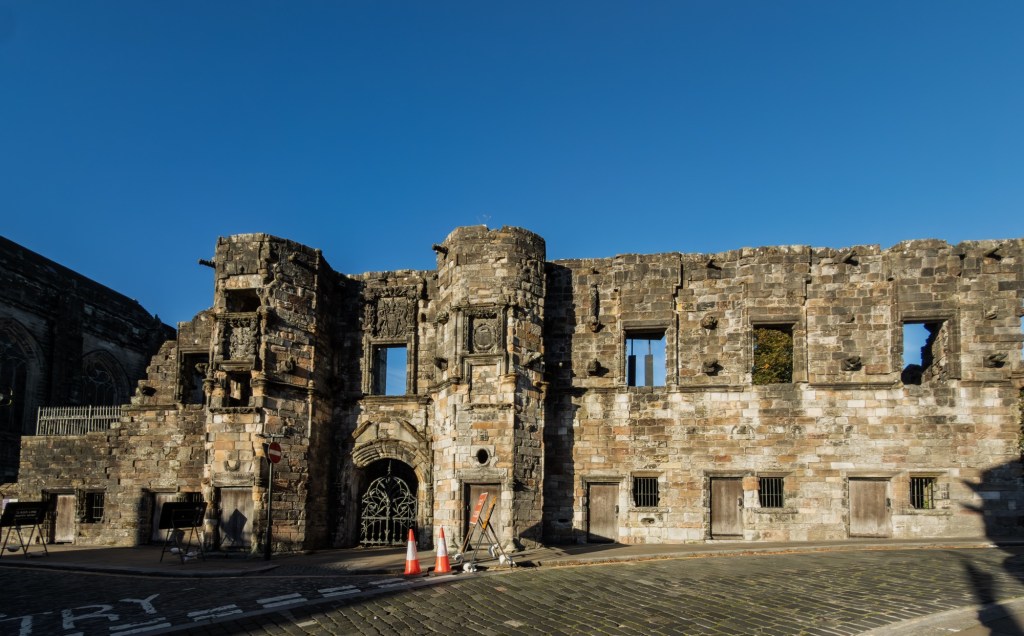
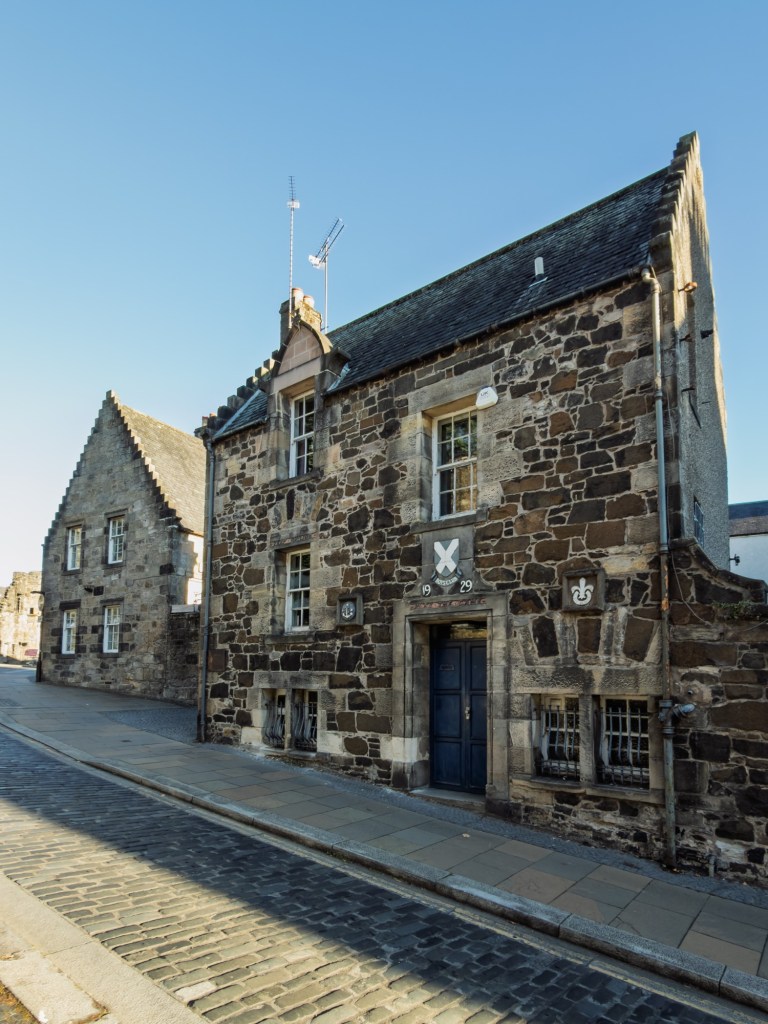
Walking from the park and ride bus stop to the castle – a couple of interesting buildings.
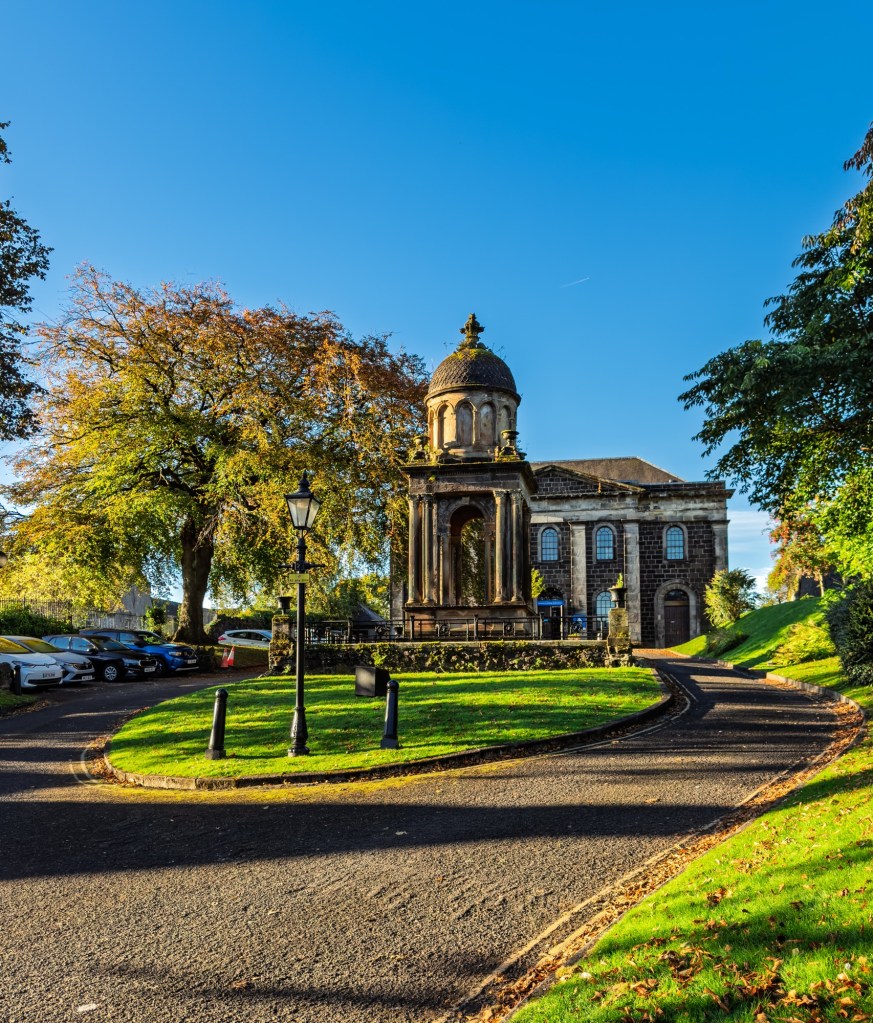
The Erskines were a very prominent and well connected family – John Erskine – see below – was, at one point, entrusted with the care and protection of Mary, Queen of Scots. Everywhere you turn and visit in this area MQoS pops up. Royal life was intrigue followed by intrigue, murders and assassinations.
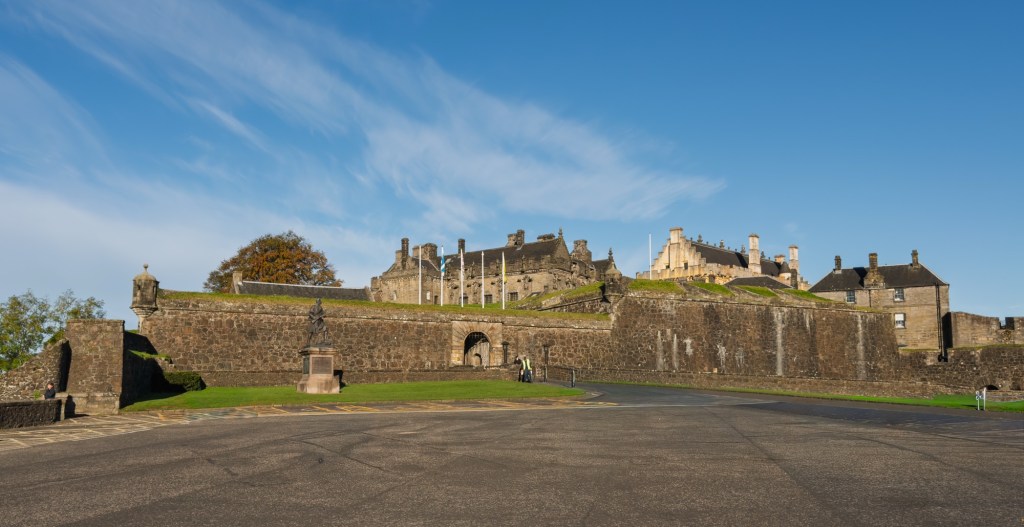
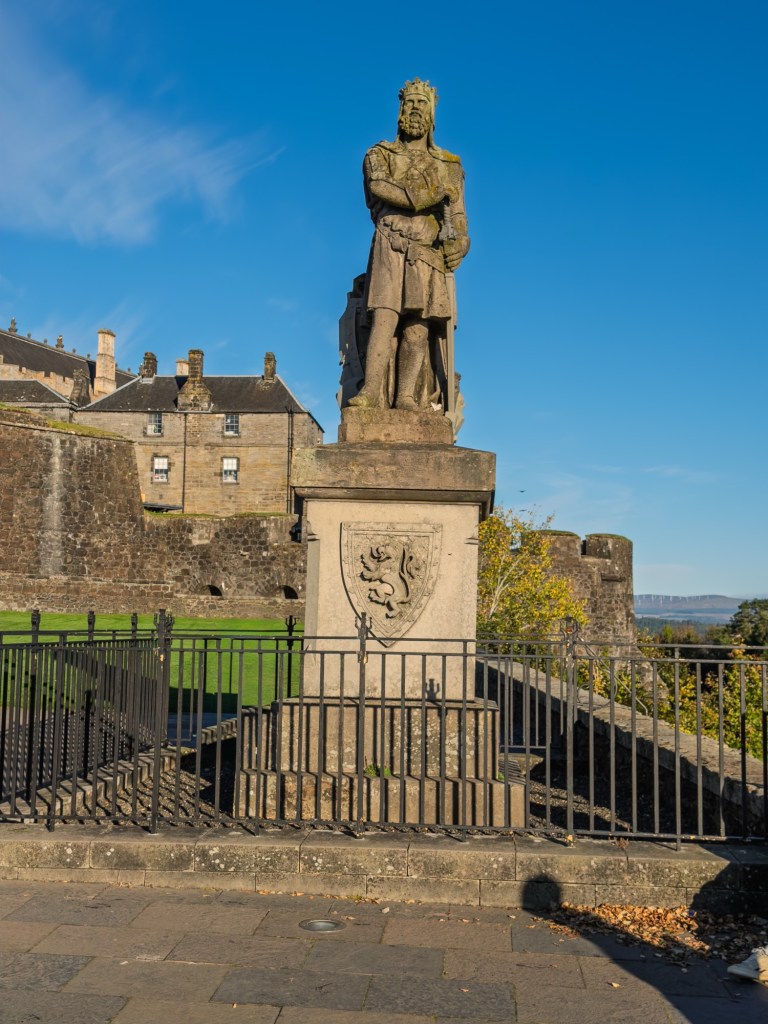
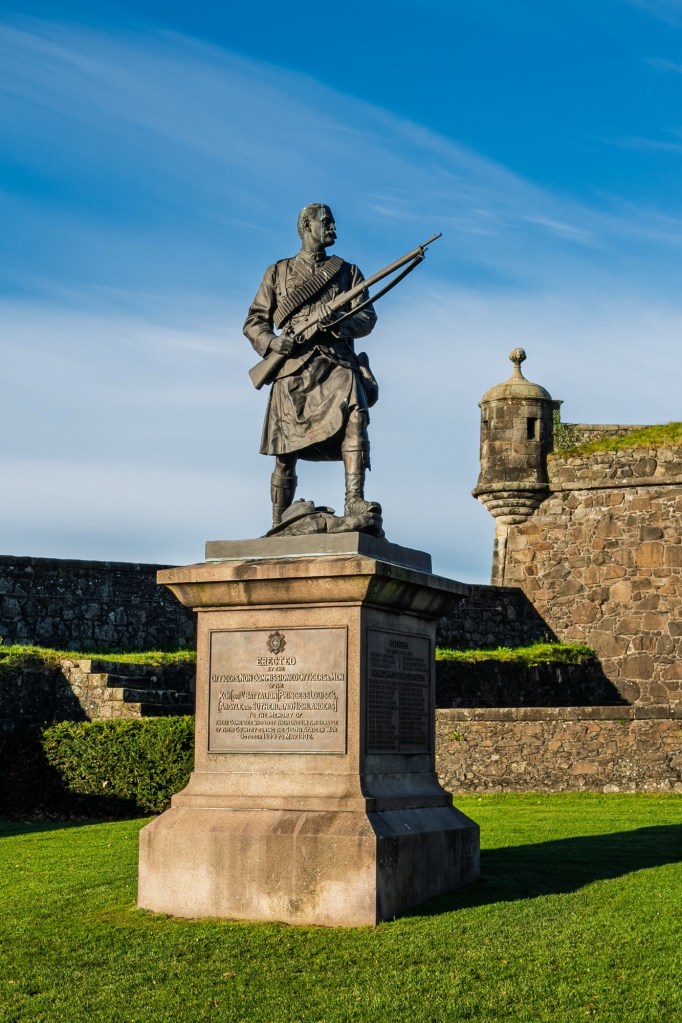
And Robert the Bruce and yet another memorial to the Scottish regiments which served in the South African (Boer) War.
And so we pressed on to learn how many times the castle changed hands, who was born, who died here, but most importantly who was responsible for building the bloody thing – that honour goes to James V.
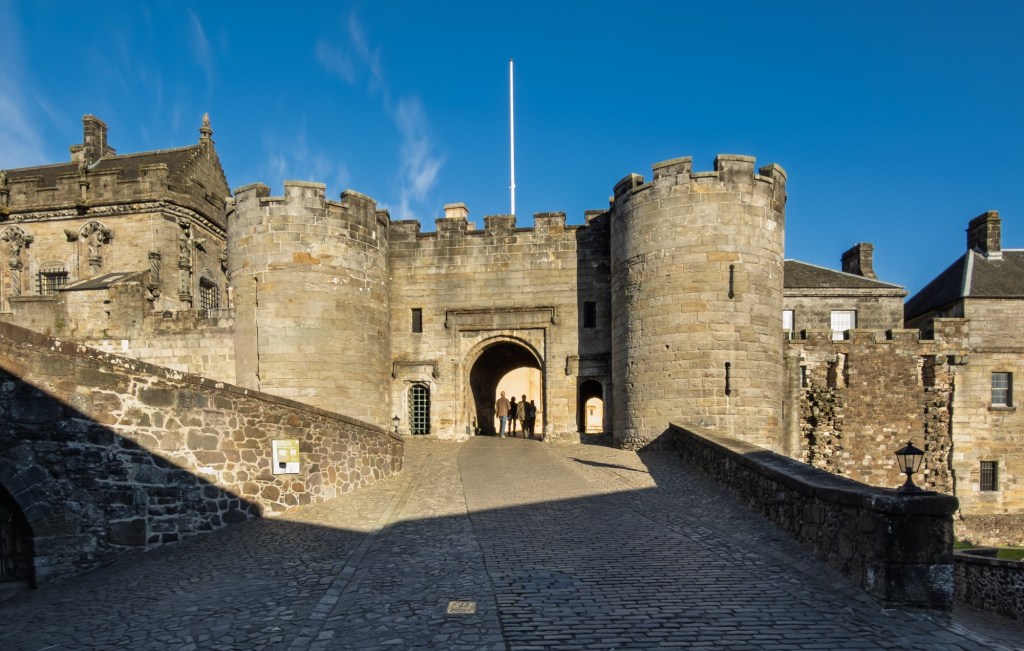
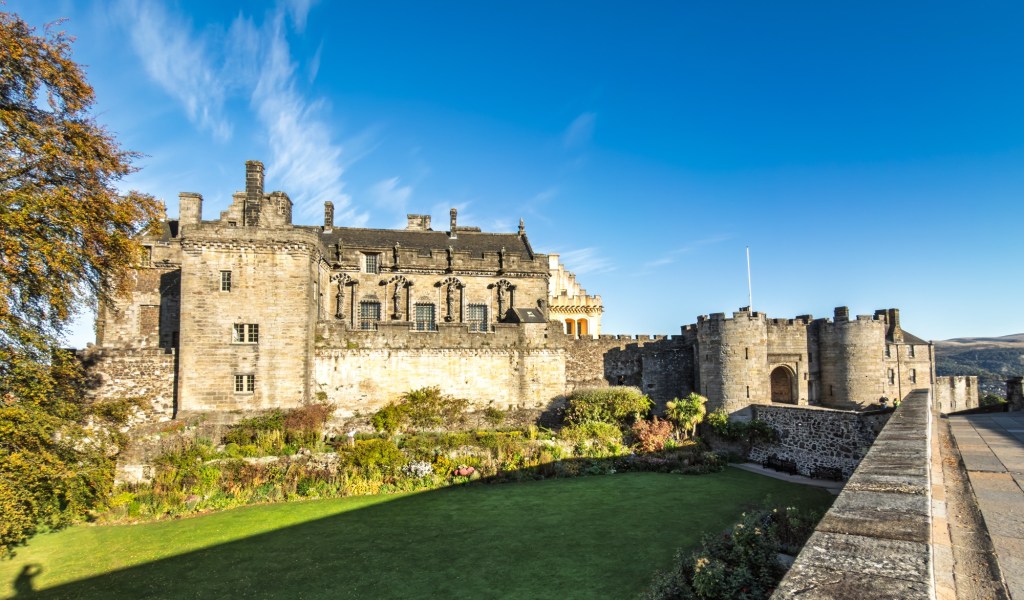
Sadly the castle was occupied by, and some might say desecrated by, military personnel right up to 1964 and only since then has there been an effort to restore various of the castle buildings. Much of what we saw was a facsimile of the original.
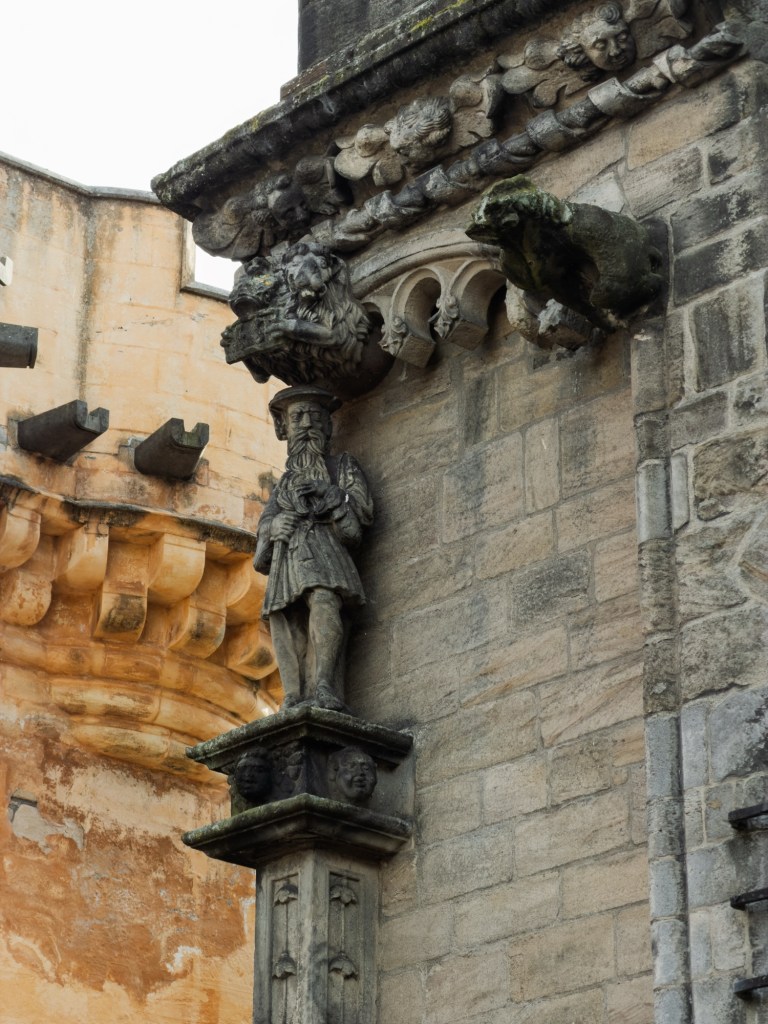
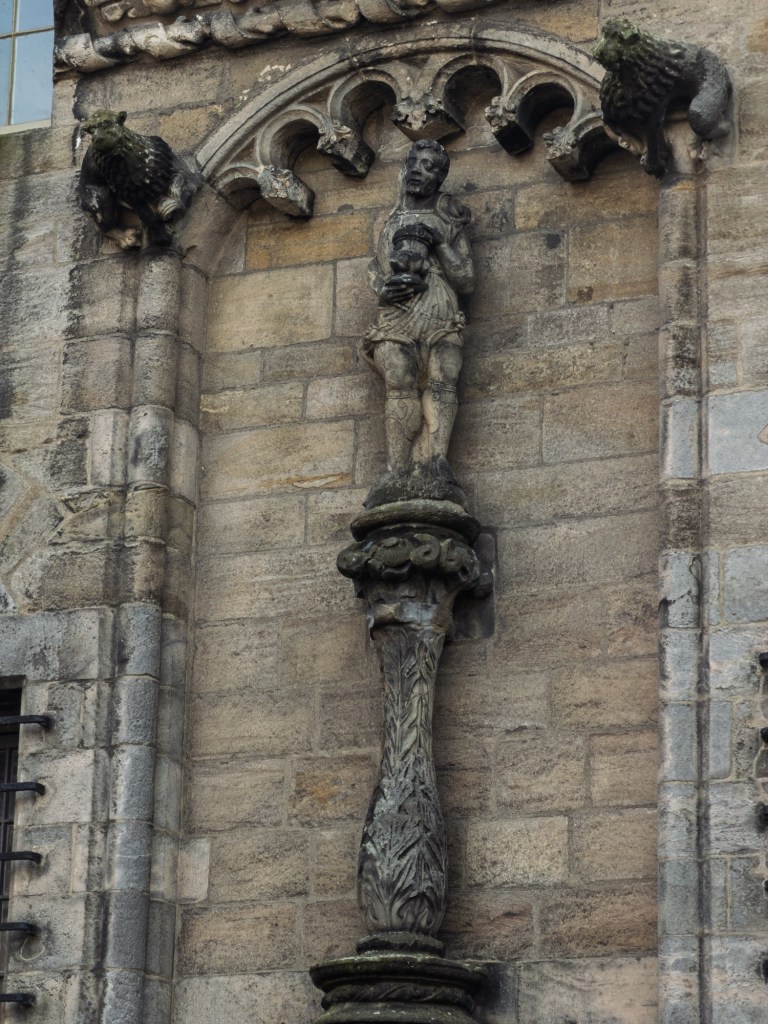
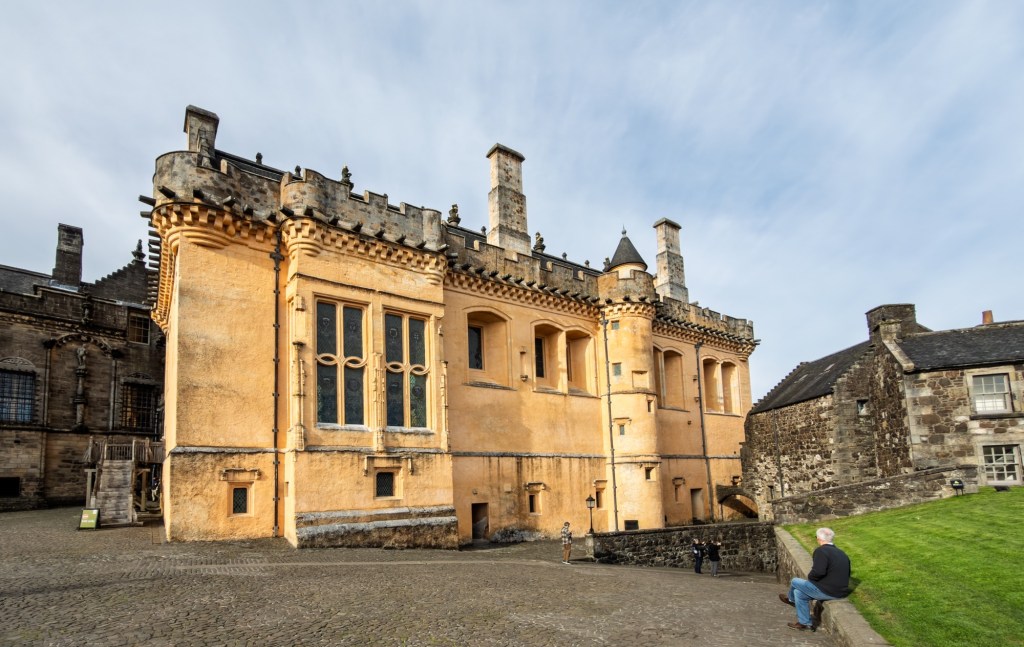
The basic structure of the Royal Palace remains intact, however and is adorned with symbolic statuary.
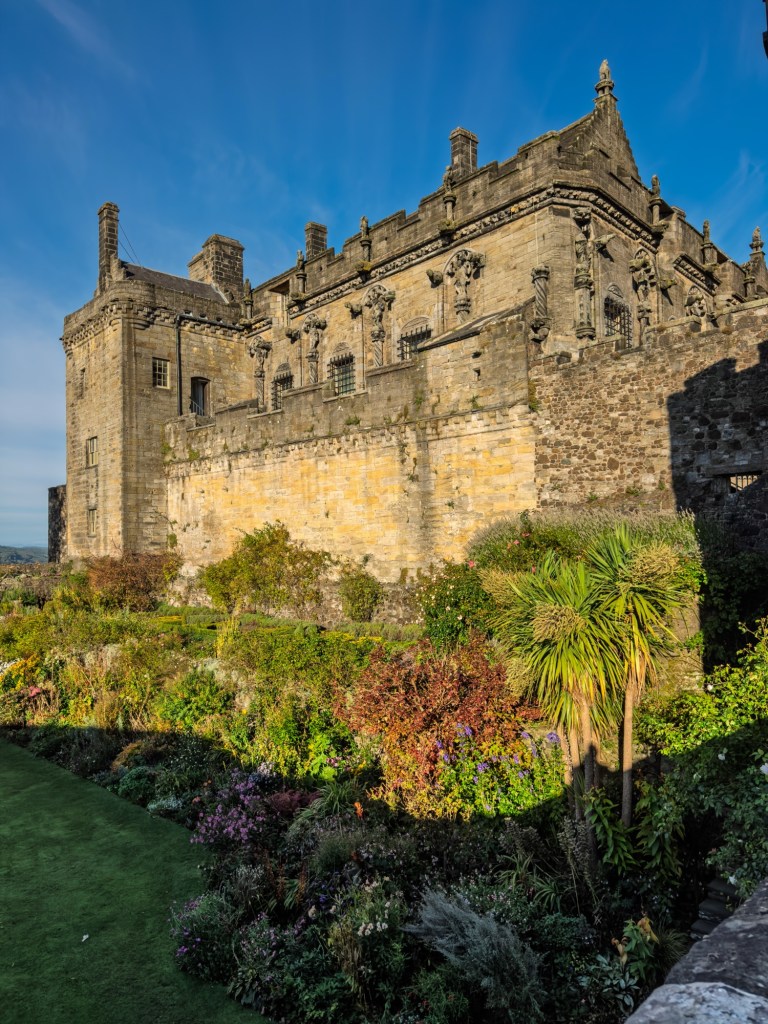
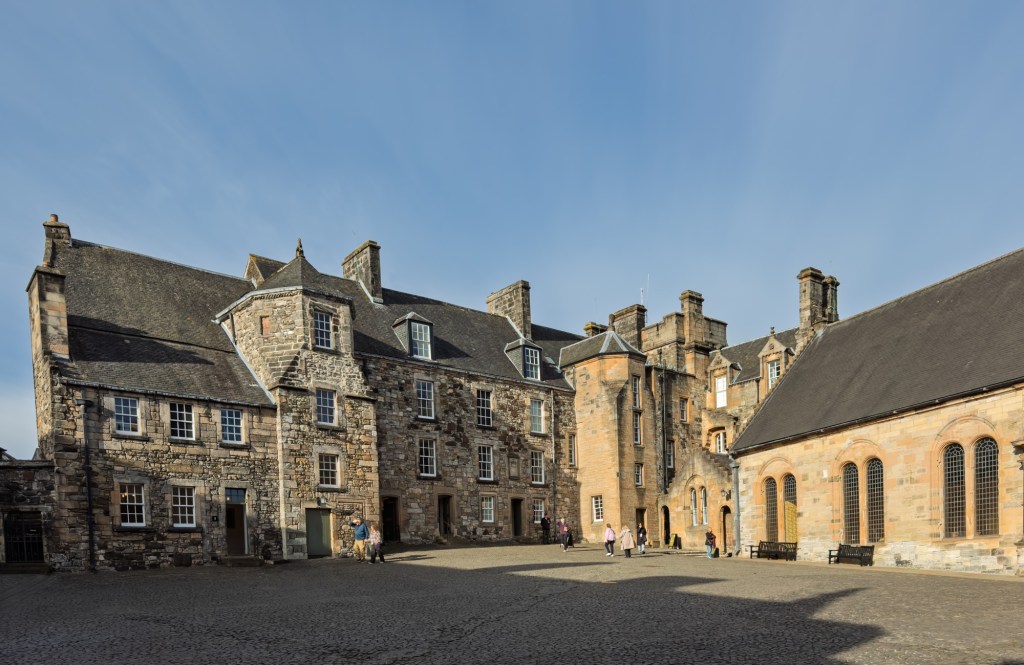
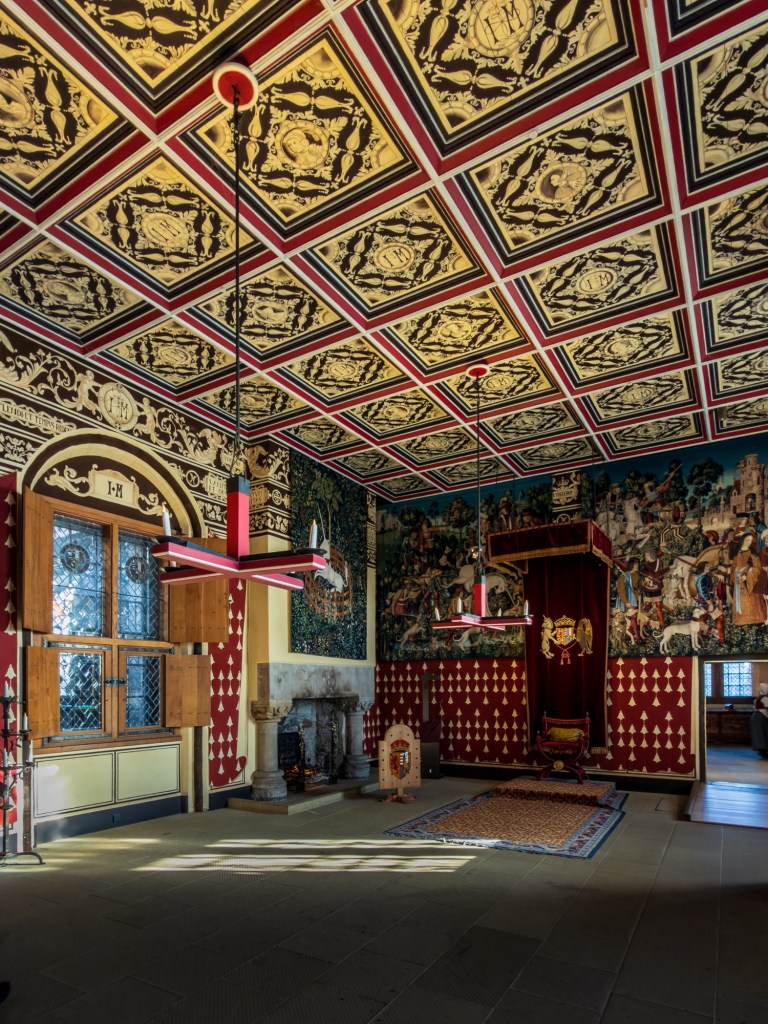
James wanted to assert his divine right as monarch by adorning the Royal Palace . . .
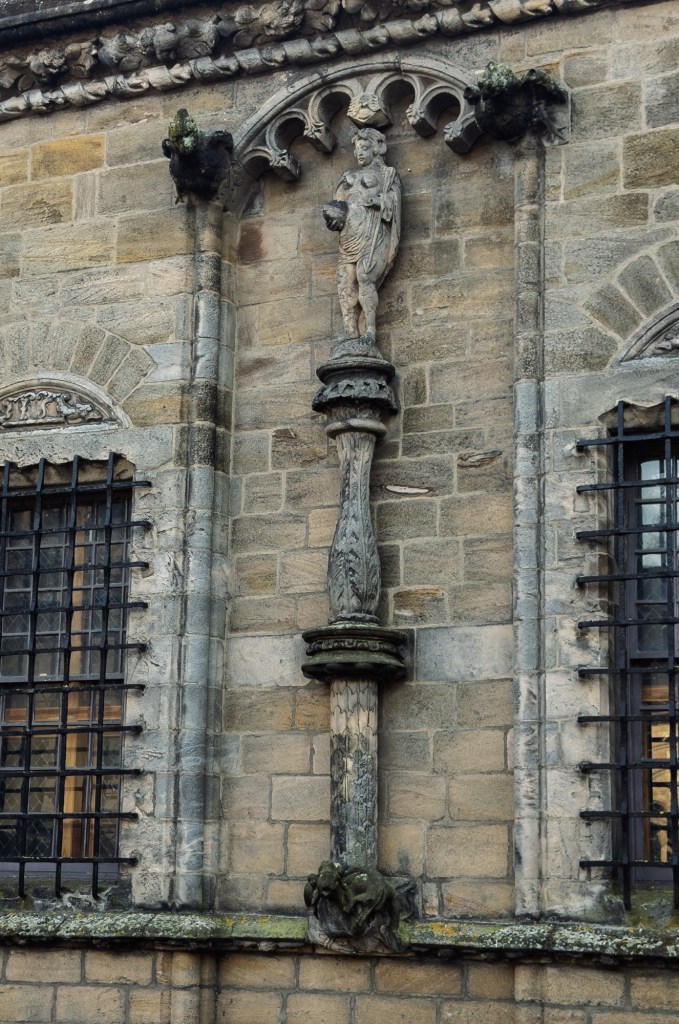
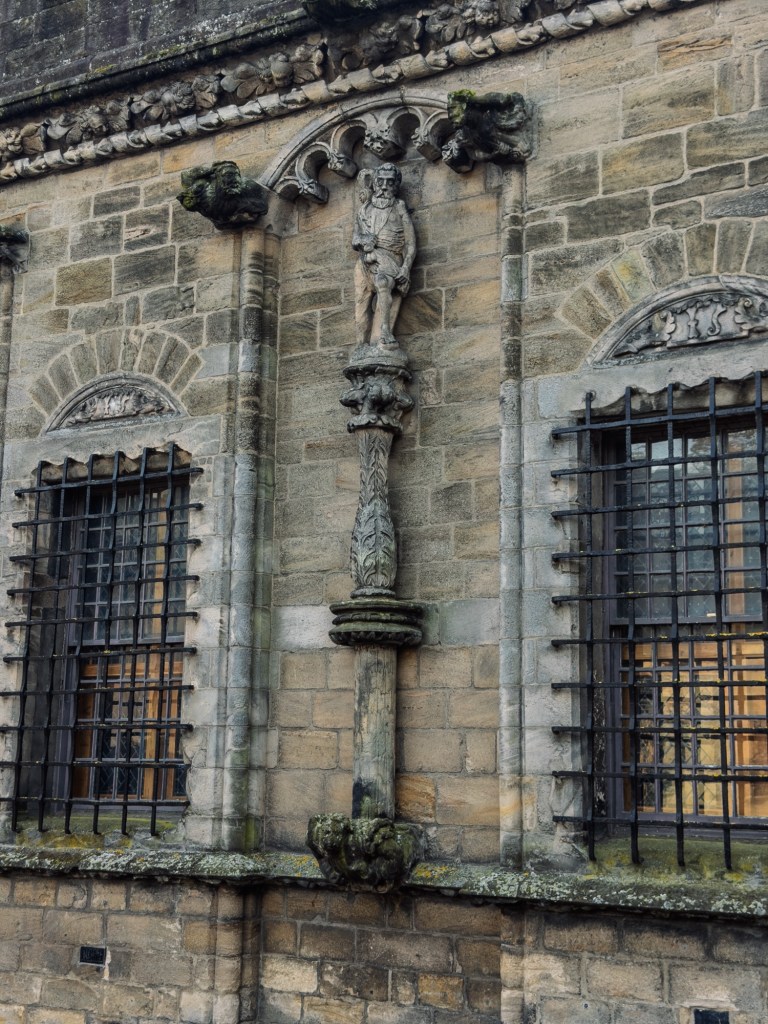
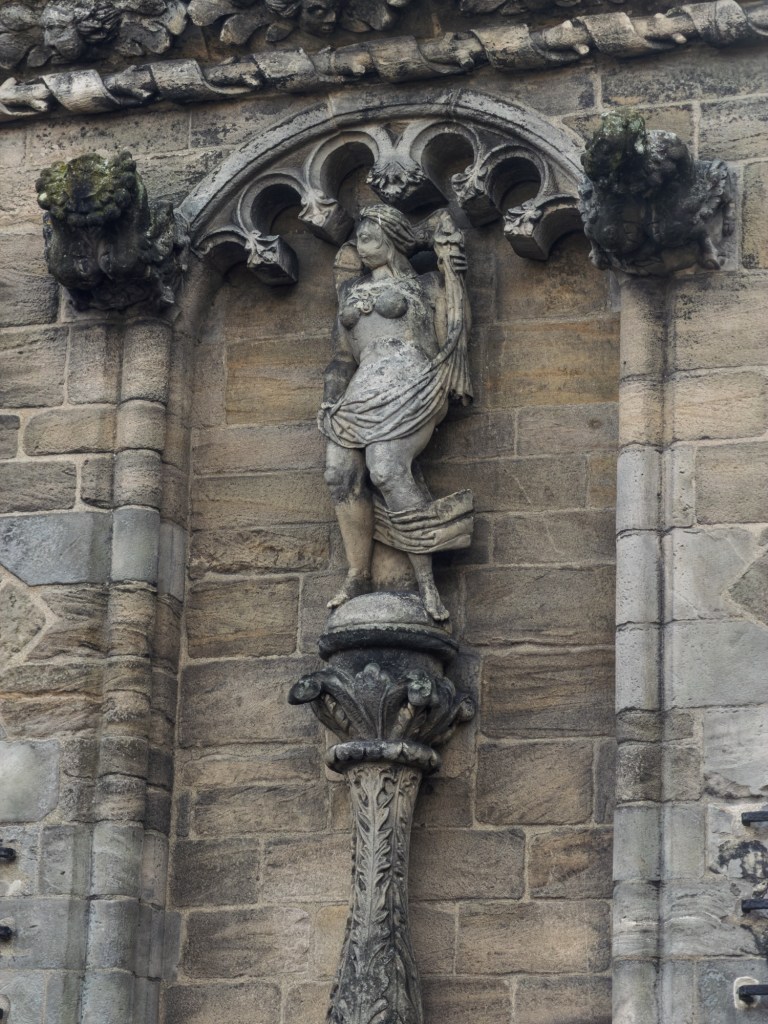
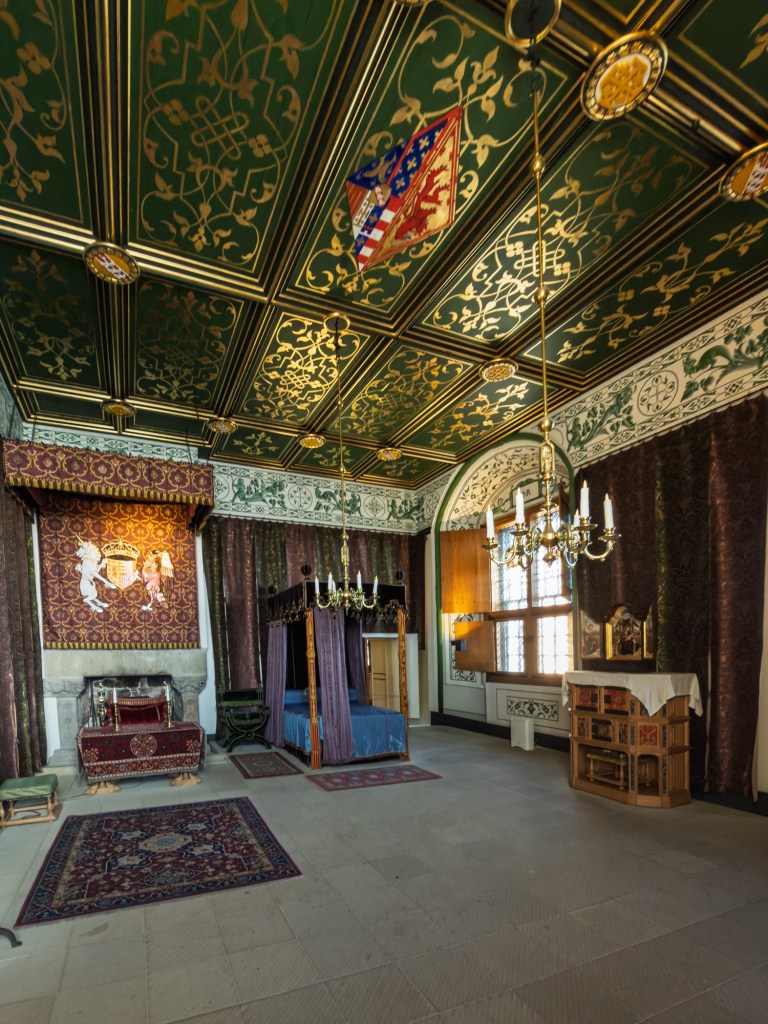
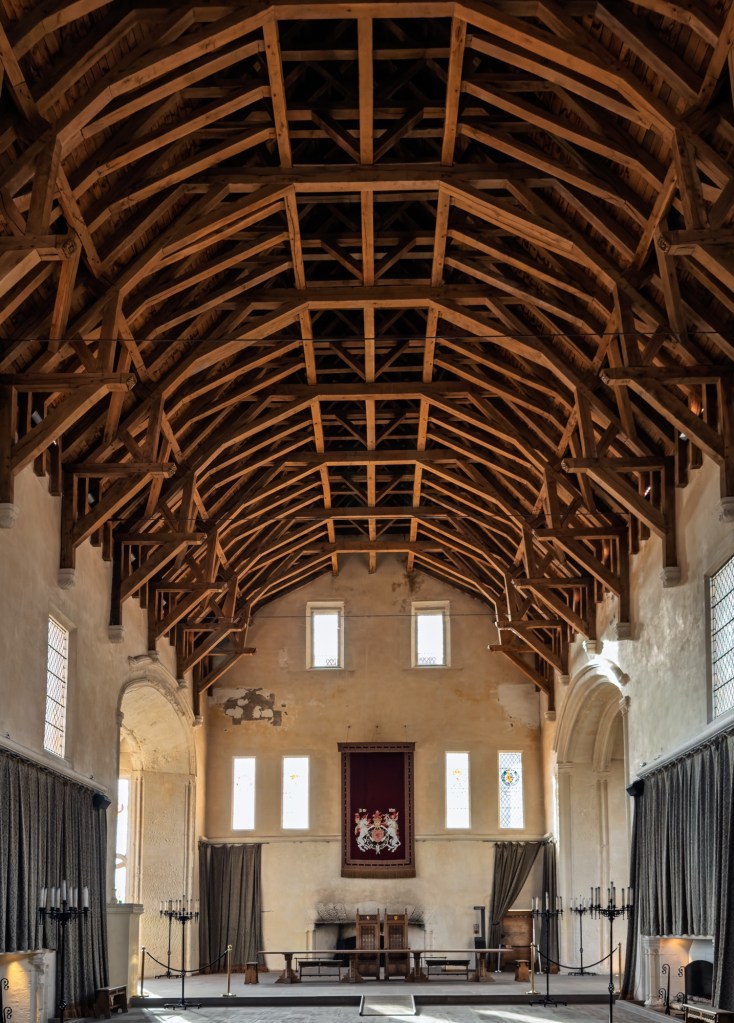
And into the Great Hall – reconstruction of the massive hammer beam ceiling consumed wood from 350 Scottish oak trees – it is OK to use it on ceilings but not to make whisky casks 🤣
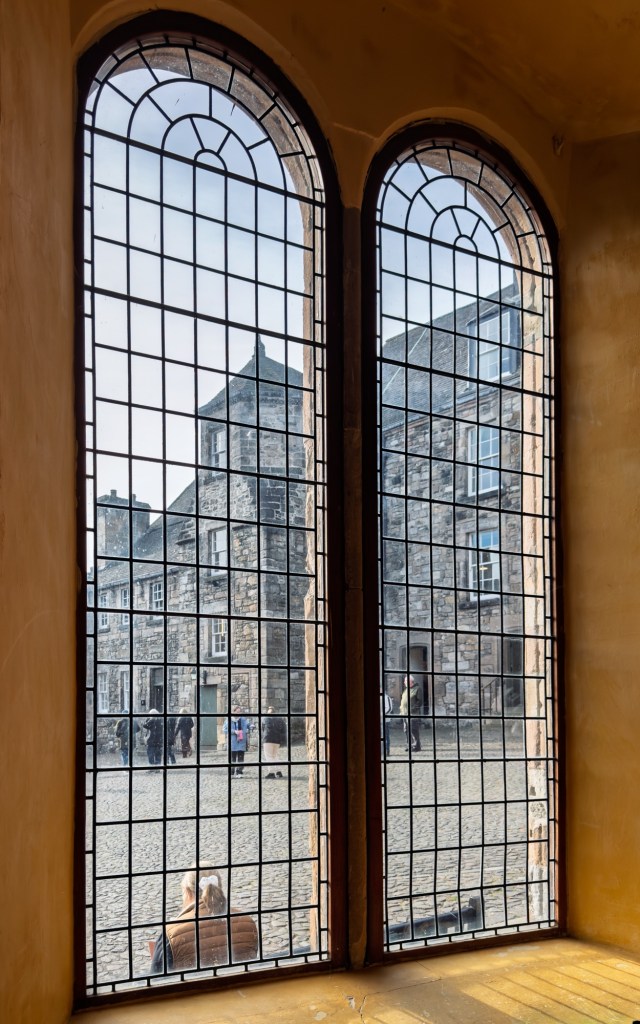
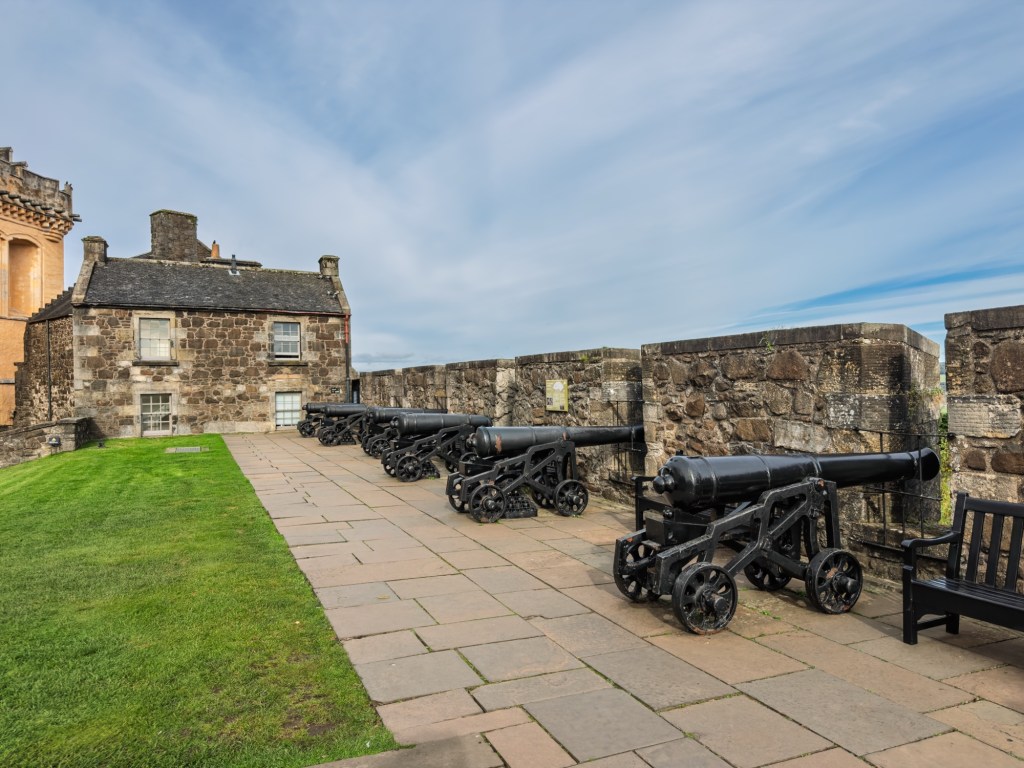
Queen Anne’s Garden . . .
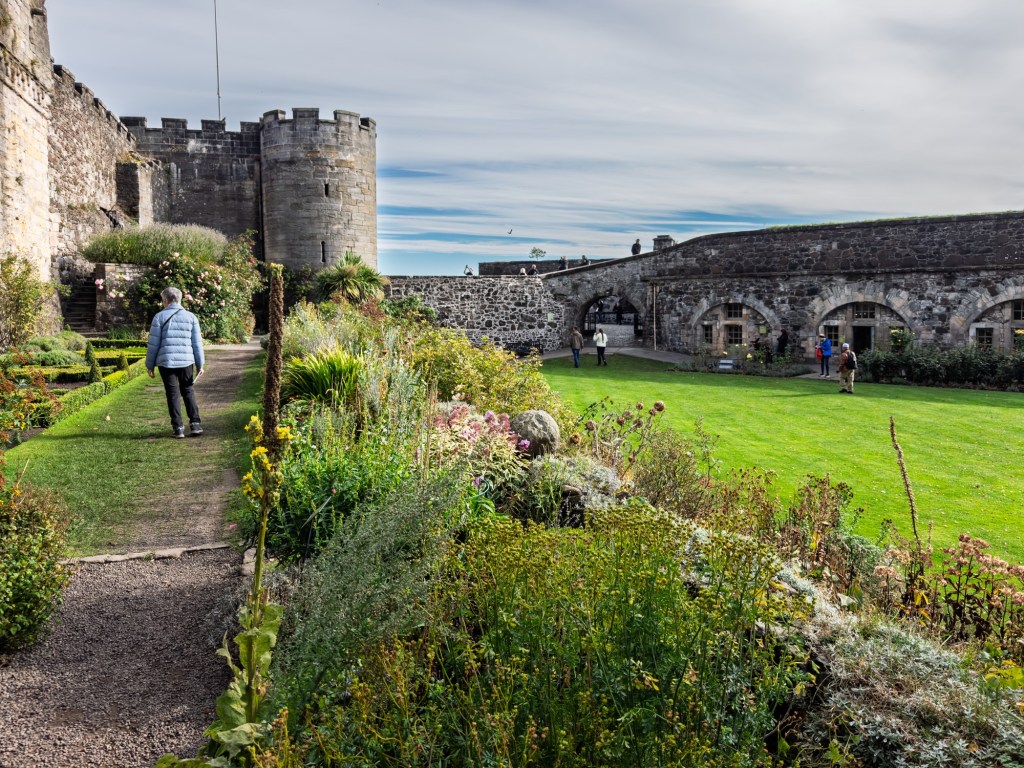
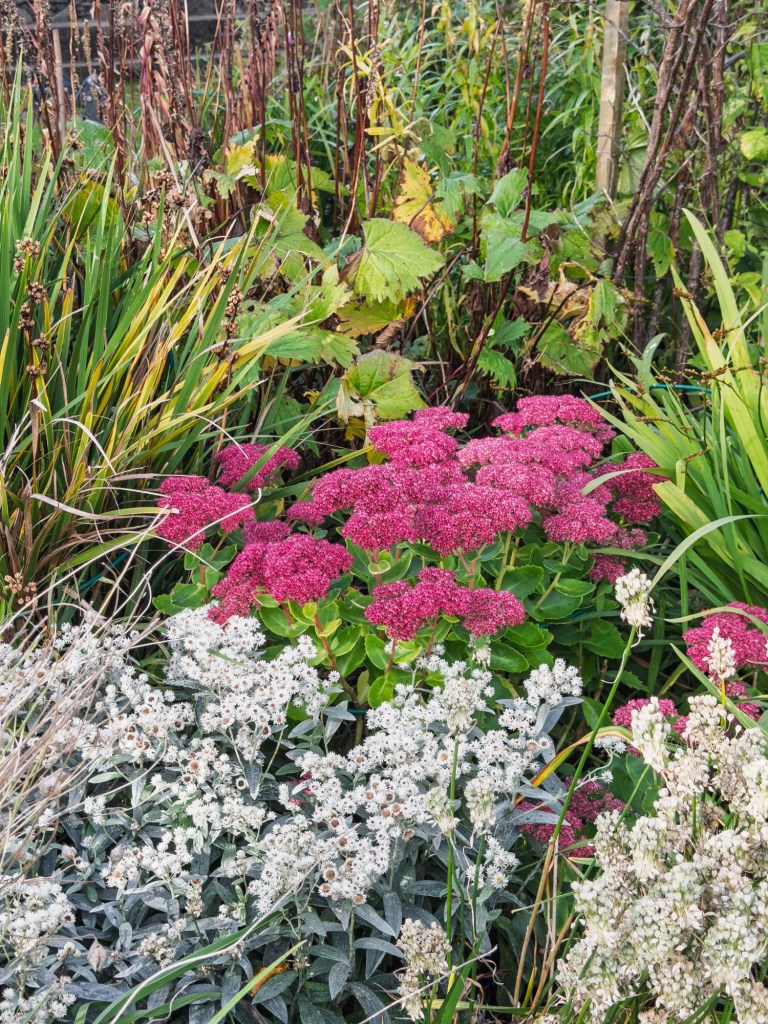
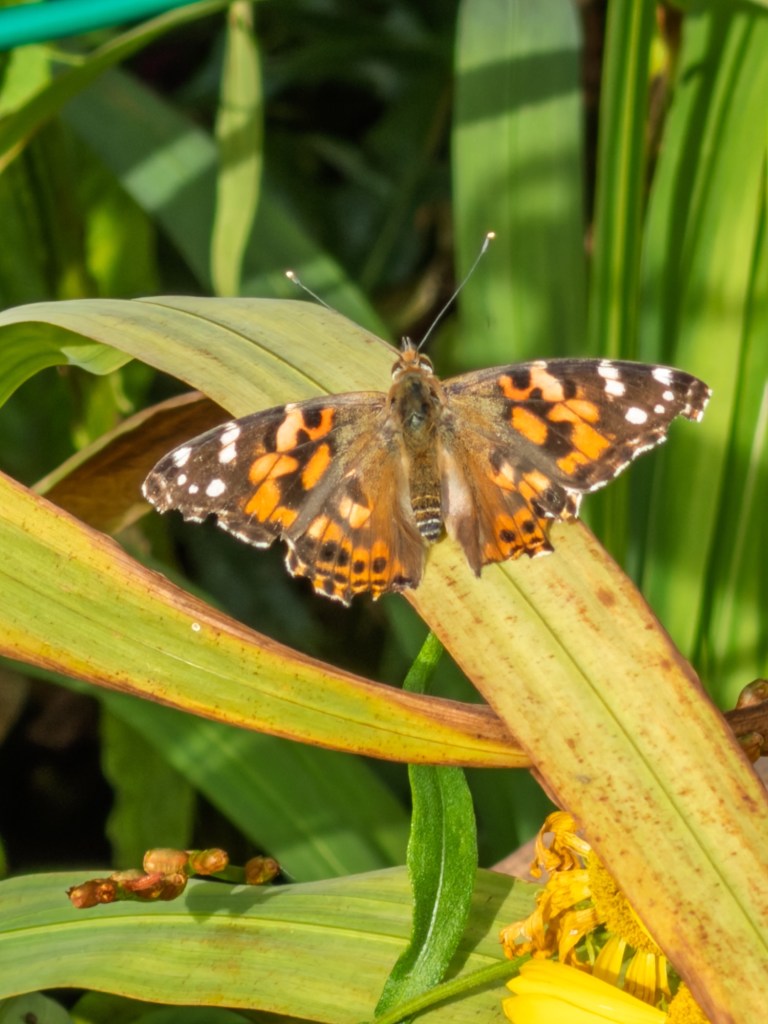
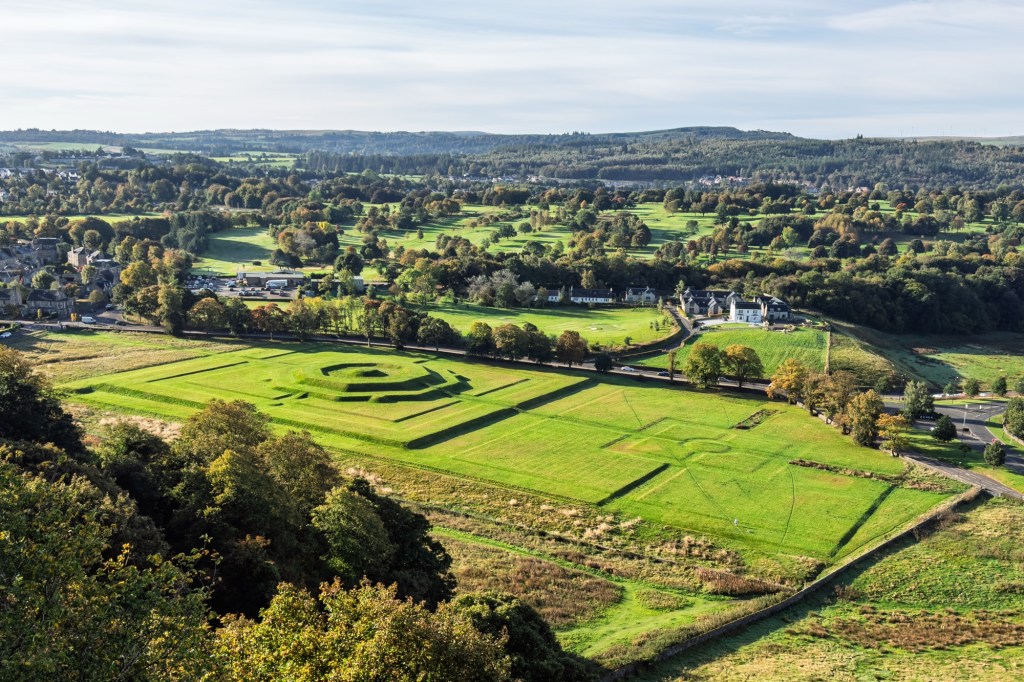
The following was something of a curiosity – view from the Ladies View/Gallery – King’s Knot and Queen’s Knot once part of the palace gardens.
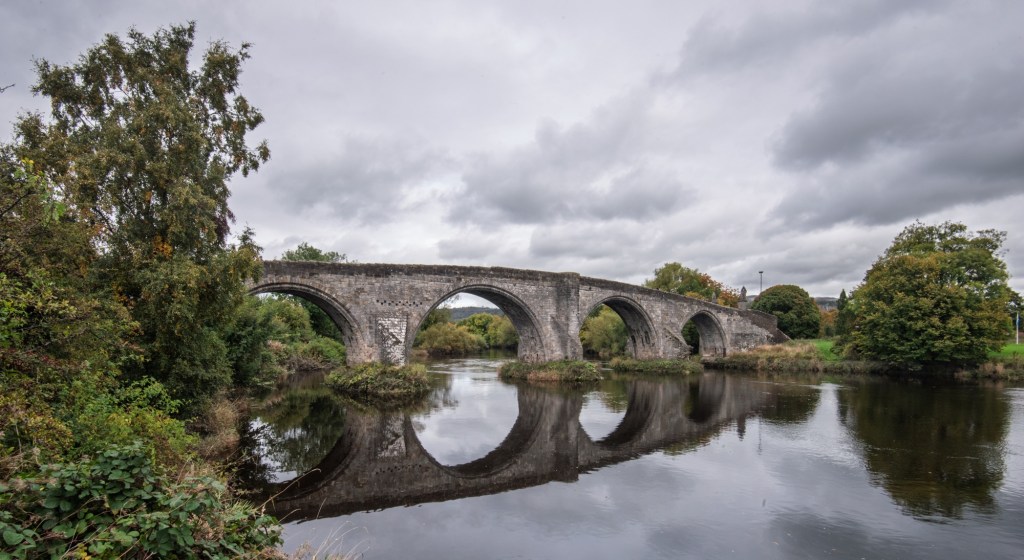
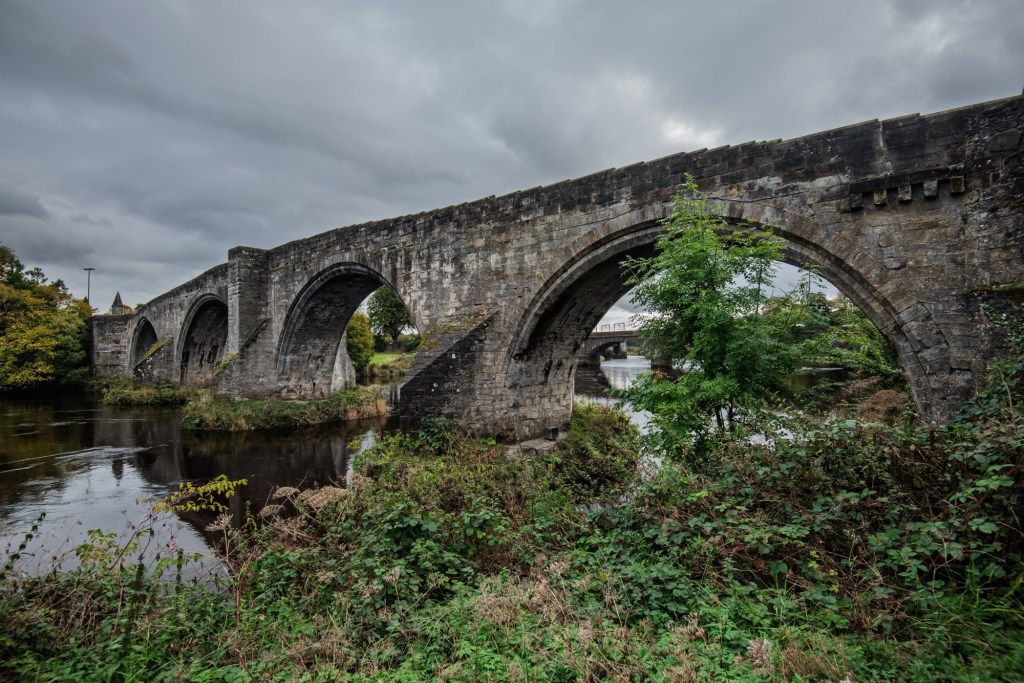
Enough of castles – lets go and find us (another) bridge; specifically Stirling Old Bridge ca. 1500. It was originally a toll bridge and during the Jacobite uprising the central span was destroyed to hinder the movement of Jacobite forces. It was reconstructed in 1749.
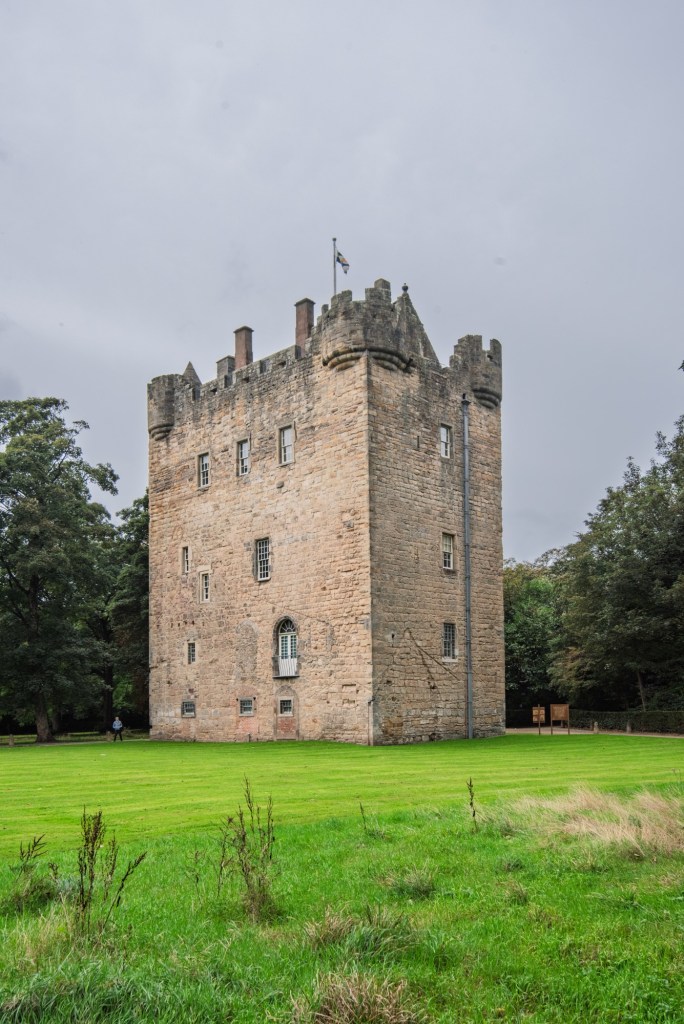
A detour en route William Wallace Monument was to Alloa and Alloa Tower – Sue’s Scottish forebears hail from this part of Scotland and went a seafaring in the early 19thC.
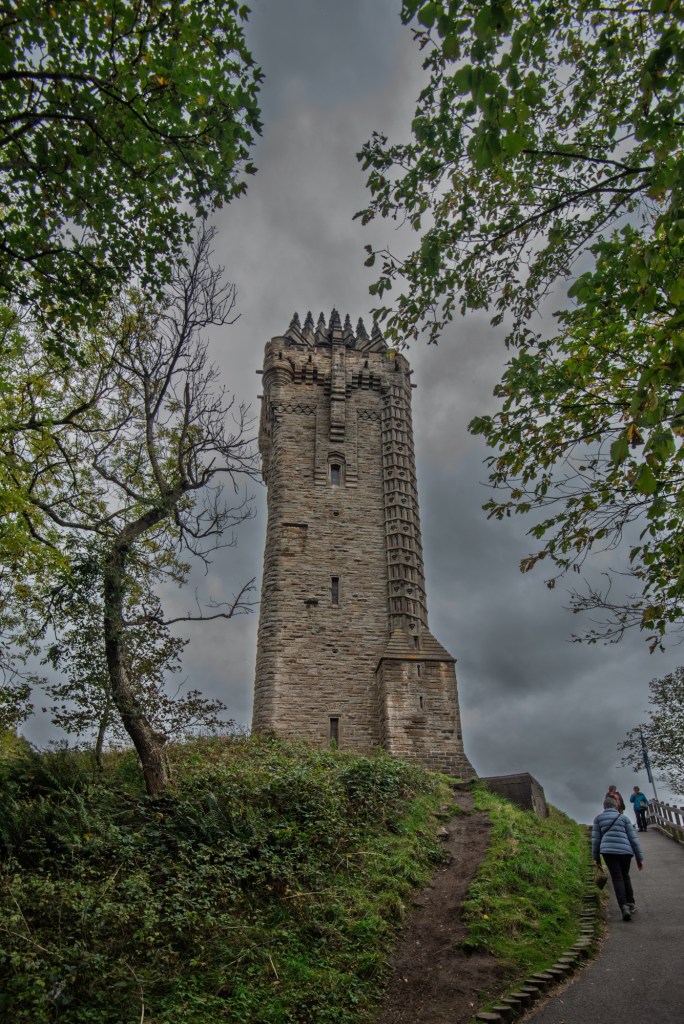
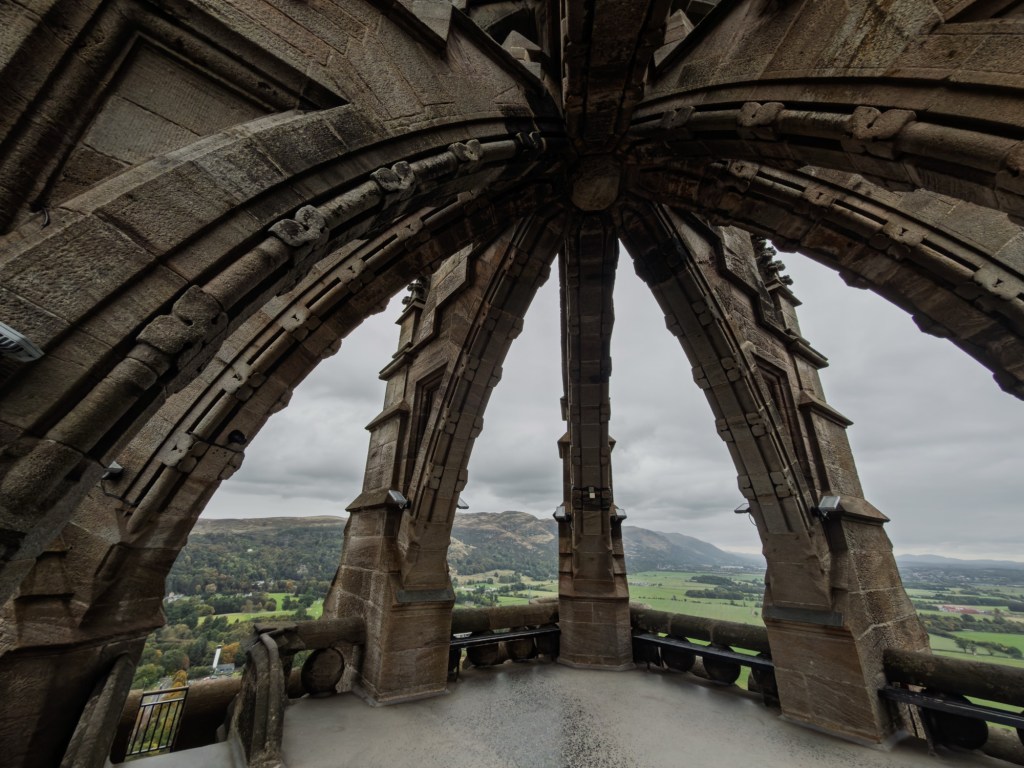
Finally – the William Wallace Monument – the walk from the foot of the mountain to the base of the monument was tougher than the 246 steps to the top of the monument itself.
Constructed in 1869 it memorialises the real or fictional William. Wallace the hero of the Battle of Stirling Bridge.
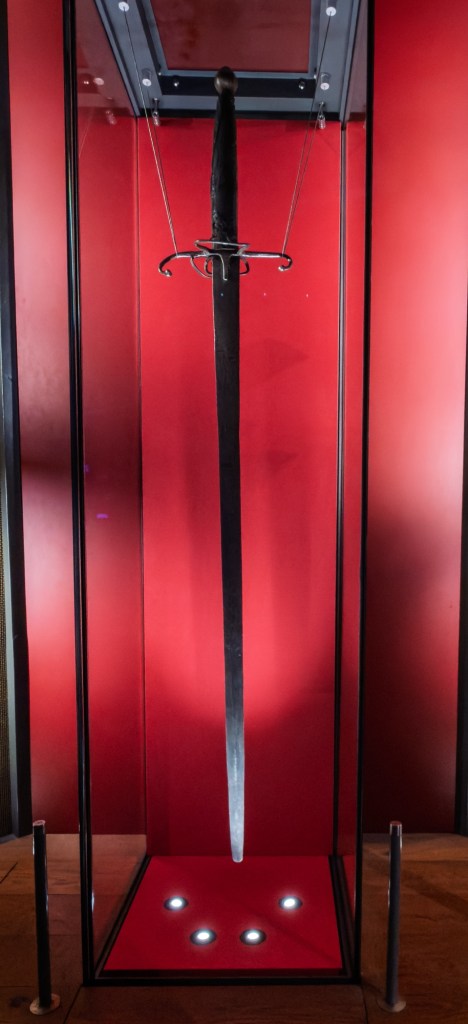
Edward I of England did not take this defeat lying down and after the Battle of Falkirk where the Welsh lowbow men took their toll on the Scottish forces, Wallace fled to France to petition the French for assistance. On his return he was turned over to the English by a Scottish sympathiser of Edward and after incarceration in the Tower of London Wallace met a bloody demise. 😖


Leave a Reply